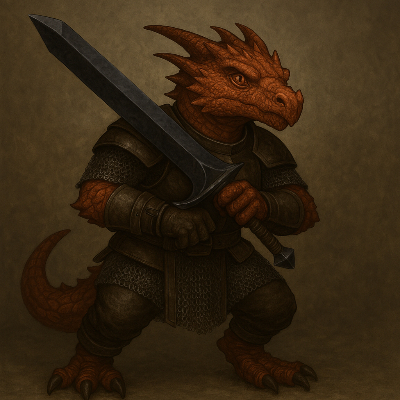
Millitaur
Armor Class 14 (natural armor)
Hit Points 85 (10d10+30)
Speed 40 ft., burrow 20 ft., climb 30 ft.
Saving Throws —
Skills Acrobatics +4
Damage Immunities —
Condition Immunities prone
Senses darkvision 60 ft., tremorsense 30 ft., passive Perception 11
Languages Common
Challenge 3 (700 XP)
Actions
Reactions
Legendary Actions
_The millitaur is a purplish-black segmented worm the size of a horse, with hundreds of legs, black multifaceted eyes and thick powerful mandibles. They wield crude stone axes._ **Mulch Eaters.** Millitaurs roam jungles and woodlands, where dense undergrowth rots beneath the canopy and piles high; leaves and plants provide much of the millitaur diet. Though millitaurs are territorial, they sometimes chase away threats rather than kill intruders. However, they also are good hunters and supplement their diet with squirrel, monkey, and even gnome or goblin. **Poisonous Drool.** As formidable as they appear, millitaurs are the preferred prey of some dragons and jungle giants, and tosculi often hunt them for use as slaves and pack animals. In defense, they’ve developed a mild poison. Millitaur handaxes often drip with this substance, smeared onto them from the beast’s mandibles. They use their axes for breaking up mulch for easier digestion, as well as using them for hunting and self-defense. **Clicking Speech.** Millitaurs communicate via body language, antennae movements, scent, and clicking sounds. Although they have no voice boxes, millitaurs can make sounds by artfully clicking and grinding their mandibles, and they can mimic the sounds of Common in a peculiar popping tone. They can be good sources for local information so long as they are treated with respect and their territory is not encroached.
Source: Tome of Beasts © 2016, Open Design LLC. Used under the Open Gaming License v1.0a.
Content designated as Open Game Content. See our full license page for complete OGL text and Section 15 copyright notices.
Formatted by BubblyBards. Publishers: contact us to claim or transfer this page.